From Ladders to Laptops
How AI Drone Inspections Are Cutting Estimates by 70%
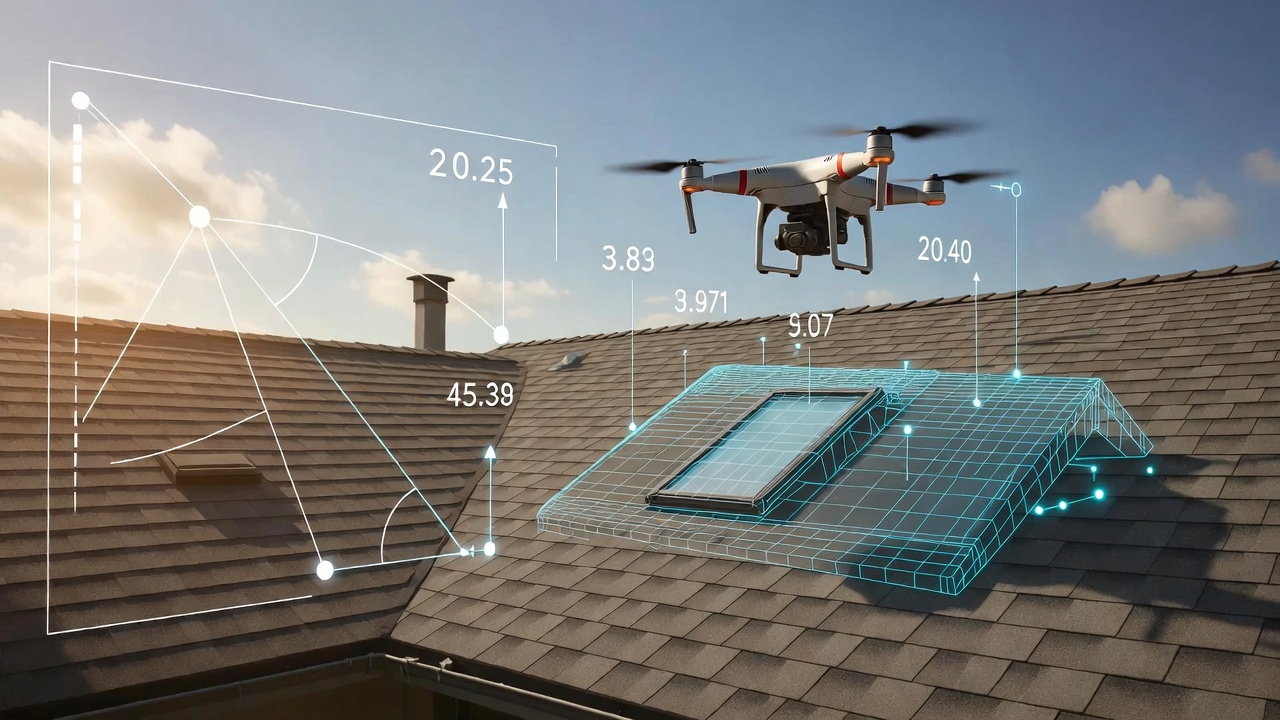
For decades, the roofing industry has relied on a time-honored, if inherently flawed, ritual for initial estimates: a contractor pulls up to a property, unhitches a heavy extension ladder, climbs onto a potentially compromised roof, and manually stretches a tape measure across the ridges and valleys. It's a process fraught with safety risks, human error, and massive time sinks. However, a quiet revolution is happening from the ground up, or rather, from the air down. Artificial intelligence paired with commercial drone technology is completely changing the timeline of the estimating game, shifting contractors away from dangerous climbs and toward high-speed, data-driven software.
The sheer speed of an AI-driven aerial inspection makes traditional measurement methods look like ancient history. Instead of spending hours meticulously sketching out a complex residential or commercial roof footprint, a technician can deploy an autonomous drone flight that maps the entire structure in less than five minutes. Sophisticated AI algorithms and computer vision software instantly process these aerial photos, automatically calculating roof pitch from elevation variables, counting roofing squares, and generating a highly accurate Bill of Materials (BOM). What used to be a half-day endeavor of driving, climbing, measuring, and drafting is compressed into a seamless 10-minute digital workflow.
This technological leap is proving to be a massive competitive edge in severe weather hotspots like Oklahoma, where seasonal hailstorms, high winds, and tornadoes can compromise hundreds of roofs in a single afternoon. Local roofers across the Sooner State are quickly adapting to handle these sudden surges in volume. For example, local service providers like McRay Roofing & Exteriors in Oklahoma City utilize high-resolution drone inspections to capture storm damage safely and rapidly, giving homeowners clear, immediate documentation without the logistical friction or physical strain of a traditional roof walk.
Beyond just taking basic physical measurements, AI software brings a level of analytical precision to damage detection that the human eye simply can't match on a brief walk-through. Advanced computer vision models are trained on millions of data points to instantly flag microscopic granule loss, split shingles, or subtle wind uplift that an estimator might easily overlook. Furthermore, regional specialists like Alpine Thermal Imaging Systems, operating across Tulsa and OKC, take this a step further by deploying aerial thermal sensors. By analyzing differences in thermal mass as the sun sets, their systems can accurately pinpoint trapped subsurface moisture and insulation failures, catching hidden leaks before they cause catastrophic structural failure.
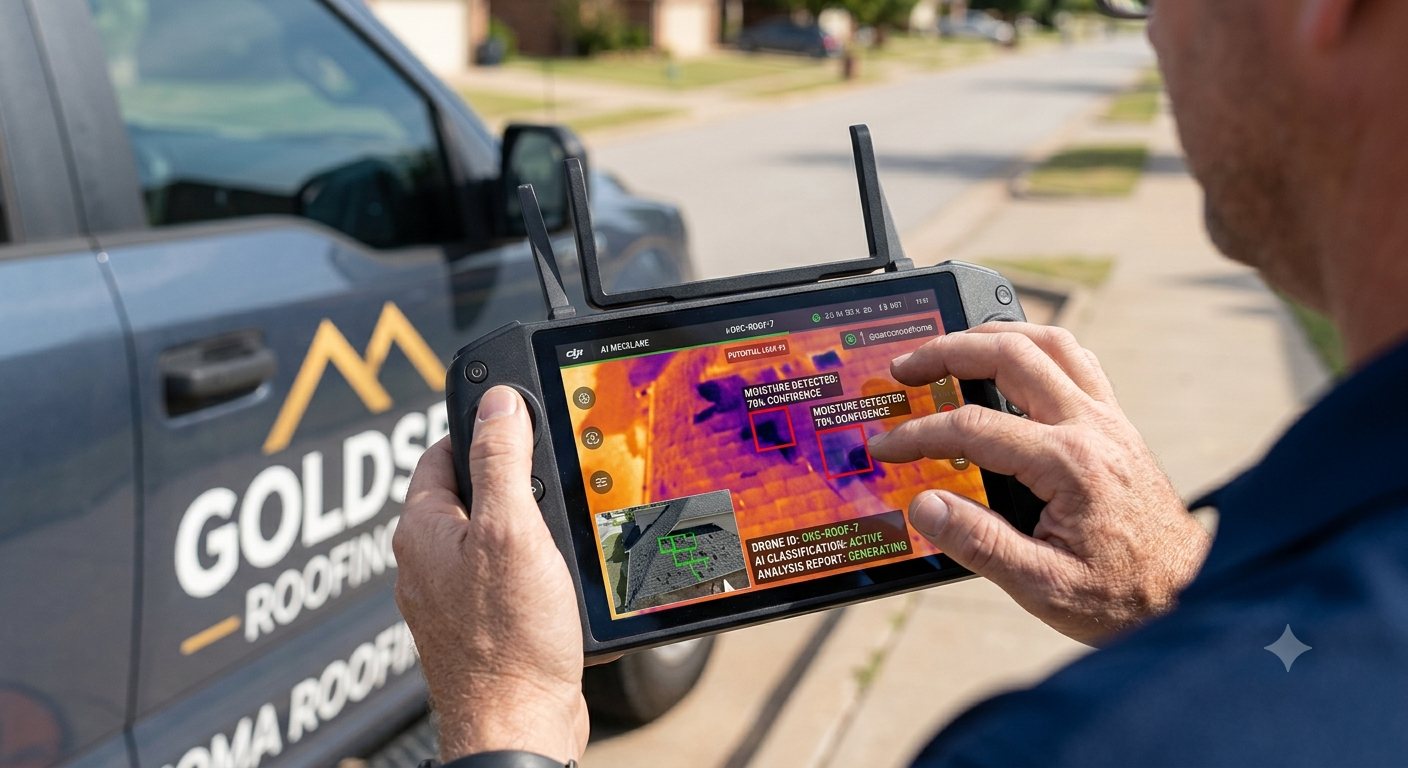
The business impact of shedding the ladder goes straight to a contractor's bottom line, fundamentally altering the unit economics of bidding. By reducing the initial assessment time by roughly 70%, estimators can quote three to four times as many properties per day without increasing overhead. Furthermore, by keeping boots on the ground during the bidding phase, companies drastically lower their liability risks, an operational shift that can lead to long-term savings on worker's compensation and liability insurance premiums. It transforms the estimate from a high-risk, expensive gamble into a low-cost, repeatable sales tool.
Ultimately, the rise of AI-driven drone inspections isn't about removing human expertise from the roofing trade; it's about optimizing it. By letting machine learning handle the dangerous climbing and tedious math, local roofers can focus their time where it matters most—building trust with the client, explaining the data, and executing flawless craftsmanship. In an increasingly competitive market, the contractors leaving their ladders on the truck are the ones winning the bids, accelerating their workflows, and safely steering the roofing industry into a highly efficient, digital future.